


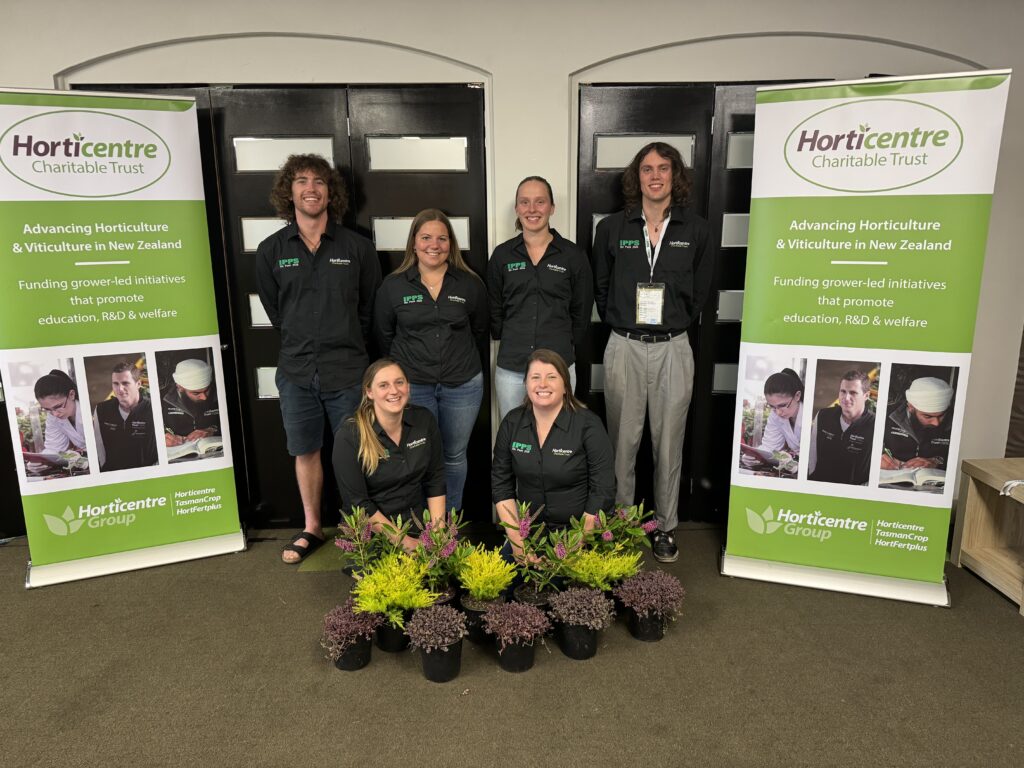
For the last few years, the IPPS Western Region has offered an exchange fellowship with the New Zealand region. It was stopped over COVID of course but the main purpose of the fellowship is to seek and to share plant production knowledge and ideas. It is focused on folks just starting their careers, to help them get involved in IPPS and do some networking. This last January Kat Knight from Tauranga, NZ visited the Western region and attended our conference, and I was fortunate enough to visit the New Zealand region this April.
First a little about me, I am the greenhouse director at the largest university in Utah, and yet it is unlikely you will have ever heard of us, probably because we don’t have a football team. Utah Valley University started off as a community college and has been a university for less than twenty years, but we have more than 40,000 students. I have been working at UVU for a little over two years and my duties include keeping a 1700 square foot research and teaching greenhouse running while managing the campus urban farm known as the GRIT garden where all of our produce is donated to the on-campus food pantry, planning and collecting native plants for botanical garden focused on Utah Native plants, and if that wasn’t enough teaching greenhouse management and plant propagation. I’m sure you are starting to see why I would find a month-long trip to New Zealand incredibly appealing. I have been a member of IPPS since my undergraduate days at Utah State University and my membership has truly helped me advance in my career. Members have helped me purchase greenhouse supplies, biological controls and even given me their course syllabi to get me started teaching. So, when I saw the opportunity to apply for the IPPS fellowship to New Zealand I jumped at the chance. Being selected to travel to New Zealand was amazing.
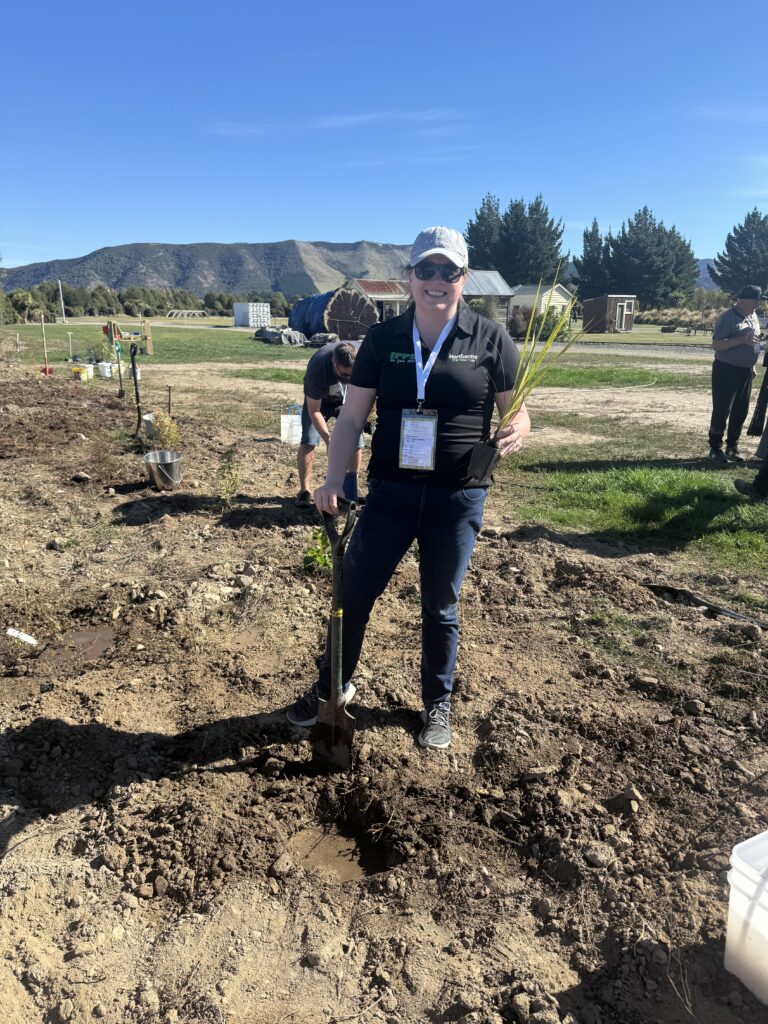
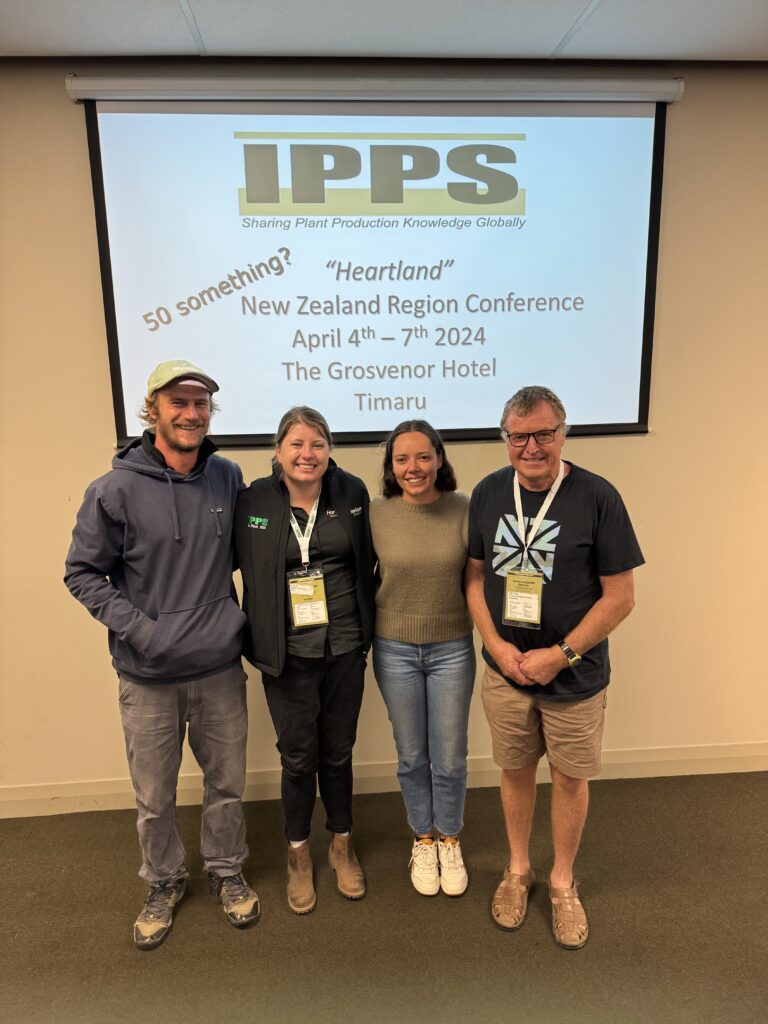
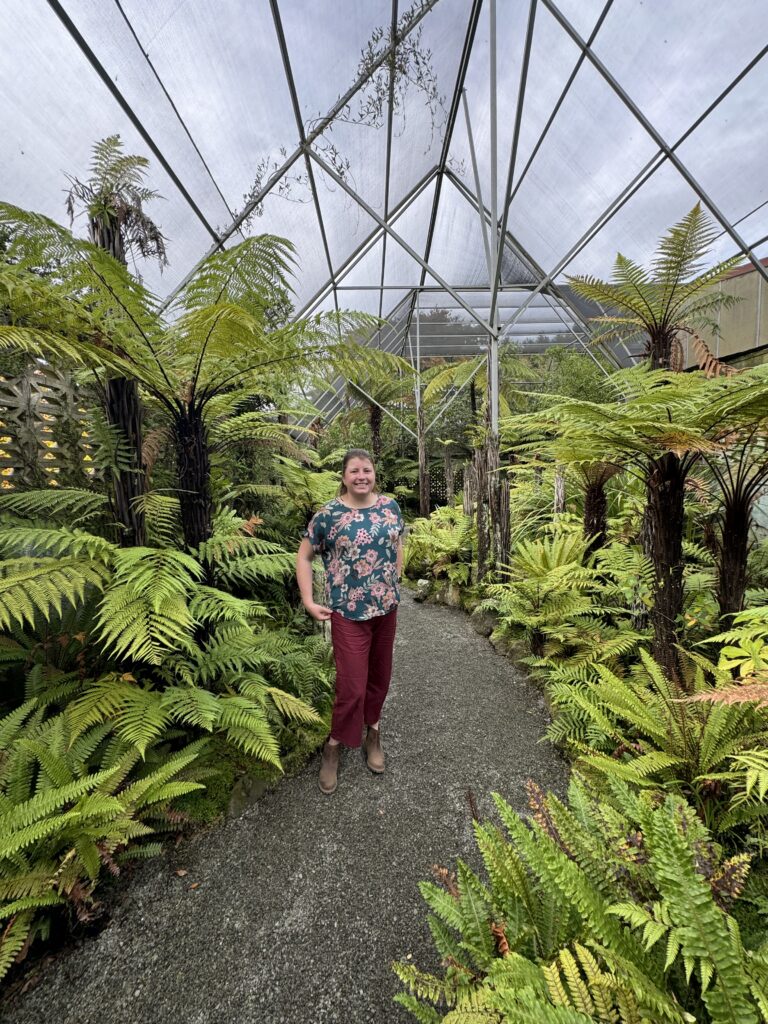
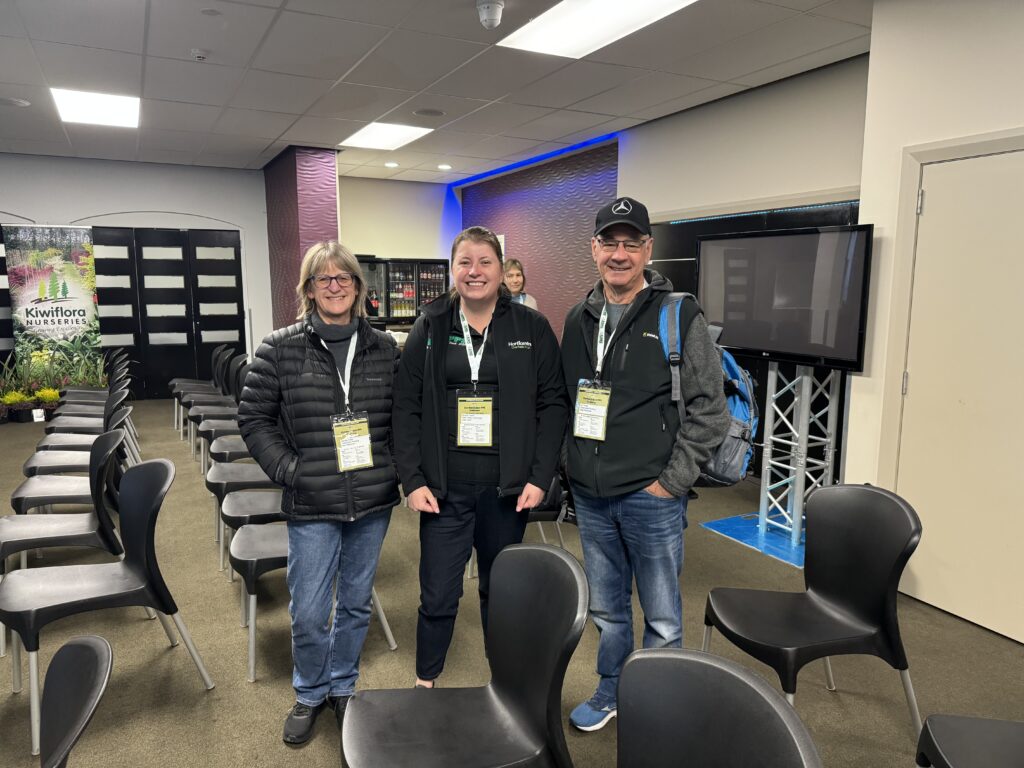
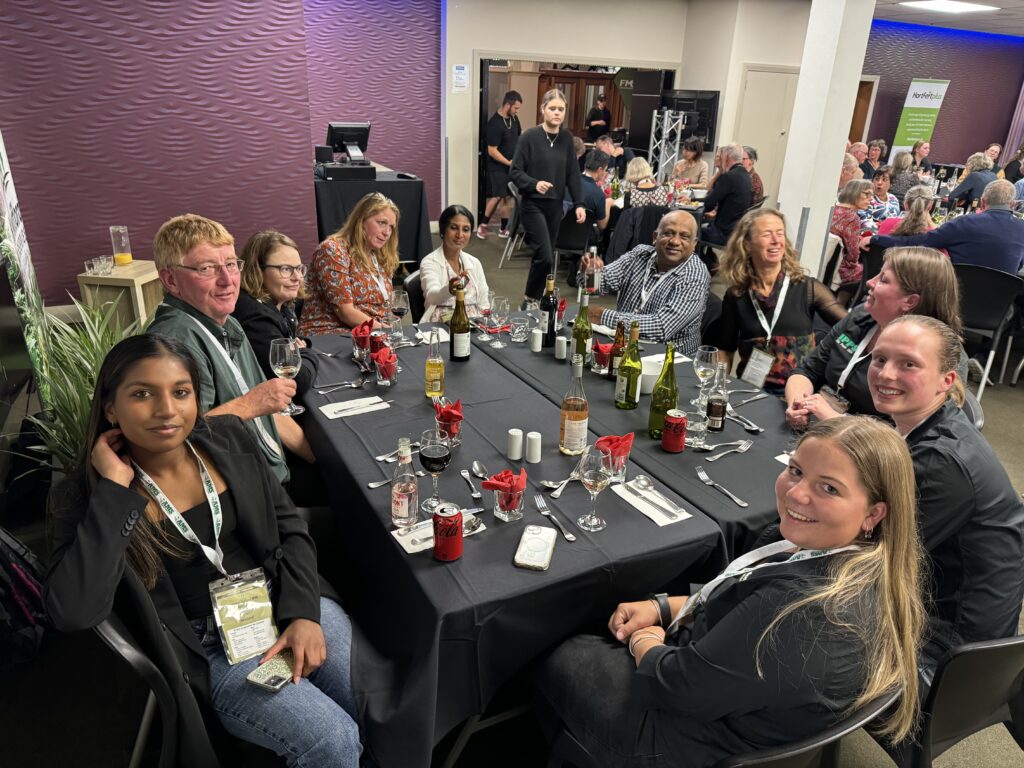
To briefly summarize what my trip looked like: I began in Christchurch which is on the South Island. I stayed with two hosts before attending the NZ regional IPPS meeting in Timaru. The furthest south I went to was to Dunedin, before turning back north and finally going to Nelson, the top of the South Island. I had a total of five hosts on the South Island and then from there I flew to the north island (not that far as the crow flies but the bumpiest flight of my life) and then made it to the north island for the second half of my trip. I went from Wellington to Napier saw Hamilton (not the musical) and then finished up the IPPS part of my trip in Aukland. In total I had eleven hosts from IPPS that all introduced me to their different specialties.
As I was preparing to go to New Zealand I of course began reading their immigration policies, and initially I was shocked with the number of banned items. There were the expected soils, seeds and plants, the unusual anything made of wood, and the downright shocking, dirty hiking boots, tents, and other tramping (hiking) gear. This got me curious about the laws about import and transport around NZ. I wanted to learn about the control measures in place that allow new species and varieties to be introduced into New Zealand. How they prevent the introduction and spread of diseases and most importantly how the growers and propagators feel about the effectiveness of that control.
The short answer about importing new plants and varieties is that it is difficult, time-consuming, and expensive. The restrictions have gotten even stricter over the last few decades with quarantine periods and testing. While I was there one of my hosts was being prosecuted for violating the law by bringing a plant out of tissue culture earlier than he was supposed to. Apparently, it is very uncommon for people to be prosecuted but the consensus was he was being made an example of. Because of the bottle neck in importing and introducing new species to NZ there has long been a large culture of breeding their own varieties of plants. Everything from roses and zinnias to their native manuka and kanuka plants. It seemed to me like everyone had their own pet breeding project and most had released a few varieties. This was amazing to me because I thought only large companies could afford breeding programs in the states. Perhaps there is a difference in copyright laws, but that’s not something I am familiar with. The goal behind these restrictions is to help prevent disease and pest introduction into their delicate island ecosystem. However, many of the growers I talked to felt that the government was going too far and that they were not following scientific recommendations on the different diseases.
For example, for years myrtle rust was something that NZ was trying to prevent from entering the country because it could potentially harm the manuka industry. However, myrtle rust was recently blown on the wind from wildfires in Australia and there was nothing they could do about it. Many nurseries were shut down because they had the rust, only for it to be discovered later that it was not nearly as harmful to the important crops as was initially expected. No one was compensated for their lost plants and the government still has an almost slash and burn mentality when it comes to the rust that puts many growers at risk of being shut down. Now it is still possible to ship plants all over NZ without any sort of inspection or paperwork, however I could defiantly see them going the way of California in a few years and making shipping of plants much more difficult.
The thing that I learned about Kiwis that resonated most with me on my trip was the number eight wire mentality. Number eight wire has been used for repairing fences in NZ. So every farm had rolls and rolls of number 8 wire, and it started get used to fix everything or build things. Over time it became part of the language kiwis use to describe themselves. It represents the ingenuity and resourcefulness of New Zealanders. To have a number eight wire mentality is the ability to create or repair anything using whatever you happen to have on hand at the time.
Every nursery or greenhouse I went to had amazing examples of the number eight wire mentality. One nursery had set up their own biochar making operation and another one had made an ingenious jig to shape topiaries using an old pottery wheel. It makes sense to me that an island nation would absolutely value the skill and fortitude it takes to dream up new ideas and make use of what you have. This is something we in the US horticulture industry also value very highly and it is nice to have a name for the skill.
Going into the trip I had several Ideas of what I wanted to learn while I was in New Zealand, and what I thought would be most helpful to bring back to students and fellow IPPS members. I was very curious how NZ institutions recruit students to their horticulture programs, how their IPPS region attracts young people to join and in general how knowledgeable the public is about horticulture and plants.
For the sake of clarity, I am going to give you my opinion on the state of horticulture education and recruitment of young people into horticultural positions in the United States. These are mostly anecdotal evidence that I have noticed or discussed with colleagues and other IPPS members, so take it with a grain of salt.
The feeling within the horticultural community and IPPS WR membership is that we are seeing a decrease in student interest in working in horticulture and young people in the industry and joining IPPS. I believe this problem is rooted (pardon the pun) in a larger societal issue, primarily that people have no idea what horticulture is and why it is important. This is especially pervasive in the suburbs and cities where many students have never seen food grown and most of their plant experience comes from turf grass. So, there is this huge invisible barrier to entry before someone can start studying horticulture let alone get a job. The next barrier to students and young people entering the industry is the fear of not being able to find a job or being underemployed (i.e. not getting health insurance, not being able to pay off student loans etc.). And this is a valid fear, many of the entry level horticulture jobs are seasonal and pay isn’t great, or they must move thousands of miles to get a good job. Finaly why don’t these new members of the horticultural job force not join societies like IPPS that could be a huge boon to them? My guess is they don’t want to pay the money, they can’t see the benefit, or they can’t afford the conference costs. The common question is then “Why don’t they ask their boss to pay for it?” Honestly, I don’t know but I can already see that our pool of potential society members has already been drained to the dregs.
So, does the NZ region have the perfect answer to all our problems? Do they have young folks clamoring to get in? Well, no, but they do have some interesting differences I think we can learn from. The big advantage NZ has on us is that kiwis have a lot more contact with horticulture as a public than we do in the States. First off New Zealand has a huge amount of agriculture and horticulture. Everywhere you look there are farms. They grow enough food for themselves and export to China and other Asian counties. Kiwis are constantly reminded of their dependence on the land and the crops they grow just by driving around the countryside in a way that Americans just are not. Secondly, every single botanical or demonstration garden I went to was completely FREE and they are everywhere. Seriously, no entry fee or anything, not even for me a foreigner. I was blown away. I went to at least 3 amazing, I would even say world class, gardens and I didn’t pay a cent. The unique benefits this provides to the public cannot be overstated. I would say studies show, but honestly, I’m not sure, so in my opinion people who walk around gardens are happier and healthier. Plus, they may even learn a thing or two while they are there. This benefit could be doubled for children who have a natural curiosity about the world. I’m sure you are thinking at this point “why would the gardens being free increase their impact? Surely you can get the same health benefits and learning from a garden you pay for.” and you would be right except in in one aspect, access. Access to a paid garden is restricted to people who have the disposable income to afford a visit to the garden and they are less likely to bring children. People who already value horticulture and nature are more likely to visit than those who have not already been exposed to plants. It feels natural to me that people who have had more positive experiences with horticulture are more likely to go on to study and work in horticulture and then join societies like IPPS but once again I have no data to back this up. Additionally, In NZ there are a lot more educational opportunities in horticulture that just going to university. There are certificates available and many of the jobs have paid apprenticeships. The students, apprentices, and recent graduates seemed optimistic about their job prospects. However, even with these societal advantages in place the NZ region is still struggling with recruitment. Some of the suggestions and brainstorming from the current members included keeping conference prices as low as possible so that more people can afford to go, making the conferences fun and varied to keep people engaged, and utilizing social media more to reach out to new audiences. I felt that all these suggestions could be helpful to our region as well.
This fellowship to New Zealand was truly life changing. I learned so much that I filled entire notebooks and could go on for pages and pages, but these were the highlights. I cannot express how grateful I am for the Western Region of IPPS for sending me and the New Zealand region for having me. I have made what I hope to be lifelong friendships with my hosts who took a stranger into their homes and taught me so much. I would highly encourage you to go to New Zealand if you ever get the chance. Especially if you can attend the international meeting in NZ this upcoming spring. Thank you all again for your support!